















A significant new resistance finding in the pathogen responsible for phoma stem canker has put fungicide stewardship firmly back on the agenda for UK oilseed rape growers. It does not mean established programmes have suddenly stopped working, but it does underline the need to choose chemistry carefully, apply it at the optimum time and maximise delivery of the intended dose to the target.
Phoma stem canker is caused by two related pathogens, Plenodomus lingam and P. biglobosus. Historically, P. lingam received most attention, but P. biglobosus is becoming increasingly important in UK and European crops. Early epidemics are particularly damaging because the fungus has more time to move from leaf lesions through the petiole and into the stem, where it can form yield-robbing cankers.
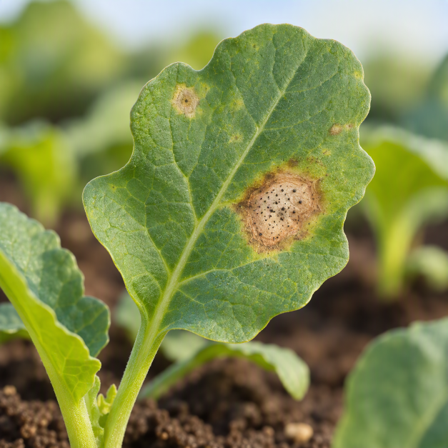
First confirmed SDHI resistance in P. biglobosus
Research published by Rothamsted Research in 2026 identified the first confirmed cases of SDHI resistance in P. biglobosus anywhere in the world. Laboratory testing classified 19 of 20 UK isolates as resistant to the SDHI active ingredients boscalid and fluxapyroxad. Some isolates showed resistance factors of approximately 500 for boscalid and 265 for fluxapyroxad, with strong cross-resistance between the two actives.
A resistance factor is essentially:
EC₅₀ of test/resistant population ÷ EC₅₀ of susceptible population
So, for example:
- Susceptible Phoma EC₅₀ = X
- Field isolate of Phoma EC₅₀ = Y
- RF = Y ÷ X = 500 & 265 (Boscalid & Fluxapyroxad respectively).
In plain terms this means they are 500x and 265x less sensitive than the susceptible isolates which is obviously concerning.
The resistance was associated with mutations in the pathogen’s succinate dehydrogenase enzyme, the target site of SDHI FRAC Group 7 fungicides like Bixafen, Boscalid, Fluxapyroxad and Fluopyram. What is also significant is that the study found no consistent fitness penalty in the resistant isolates, suggesting that the resistant strains could persist within pathogen populations and, over time, become dominant.
These findings are based on laboratory tests of course, and further work is needed to determine whether the same effects on disease control occur under field conditions. They should therefore prompt stronger stewardship, rather than an immediate conclusion that every SDHI-containing product will fail. Fluopyram, for example, showed only partial cross-resistance in the study, with much smaller changes in sensitivity than Boscalid or Fluxapyroxad.
There is also evidence of reduced azole sensitivity elsewhere in some European populations of both Phoma causing species. This provides another reason to avoid repeated reliance on a single mode of action, even where existing programs continue to provide useful field control.
Which fungicides have performed most strongly?
The latest AHDB fungicide performance report provides an important field perspective. Across 18 trials conducted between 2015 and 2025, Aviator Xpro, Architect and Shepherd delivered the strongest reductions in stem canker. Depending on product and dose, these treatments reduced stem canker indices to between 5 and 13, from a starting index of 45 on a 0–100 scale. Propulse and Filan reduced indices to between 11 and 16.
These results show that several modes of action can contribute to phoma control. However, some historically strong products contain SDHI chemistry for example, Bixafen in Aviator. In light of the new resistance data, mixtures, co-formulations and alternation between effective modes of action are becoming increasingly important.
Timing and coverage are central to stewardship
Robust chemistry cannot compensate for delays in application. Phoma is at greatest risk of causing stem canker later if the initial infection occurs on smaller plants where the distance mycelia must travel within leaf to the stem itself is small. AHDB advises treating susceptible varieties, particularly those with Recommended List stem canker ratings of 7 or below, when 10-20% of plants show Phoma leaf spots. Where new lesions indicate reinfection, a second application may be required four to ten weeks later. Varieties rated 8 or 9 may not require treatment unless the 20% threshold is exceeded, although growers should consider their own attitude to risk and follow their agronomist’s advice here.
Application quality also plays a critical role in resistance management. Poor mixing, drift, leaf bounce, run-off or inadequate spreading across the leaf surface can expose parts of the crop to less than the recommended dose. An adjuvant cannot reverse target-site resistance, but better delivery can help prevent avoidable underdosing and give the selected fungicide the best opportunity to perform as intended.
How Kantor supports application quality
This is where Kantor makes an important contribution. Its alkoxylated triglyceride formulation is designed to improve tank-mix dispersion, reduce drift-prone droplets, enhance deposition, lower surface tension, and increase spreading and retention on the waxy oilseed rape leaf. It can also accelerate the penetration of partner actives through the cuticle, an important consideration during cool autumn applications, when the waxy leaf surface can be difficult to penetrate.
Kantor also buffers spray water to around pH 6, which is suitable for many crop protection fungicides. This can help protect susceptible chemistry from alkaline hydrolysis, while its micro-emulsifying properties help maintain the availability of tank-mix components in cold water.
Kantor is not a cure for developing SDHI resistance. Its value lies in supporting more reliable delivery of the chosen active to the intended target. When every effective mode of action needs to be protected, that added application security can form a valuable part of responsible stewardship.
Use rate and label compliance: Kantor is recommended for use in oilseed rape at a maximum concentration of 0.15% of the final spray volume, equivalent to 75 ml in 200 L of water. Use remains subject to the conditions applying to the partner plant protection product and its current authorisation. Growers and operators should always follow product labels and check current approvals before application.