















Those that know me well will know that I have had a lifelong love of flying and one thing that’s clear this year from above is the return of a patchwork of yellow. Granted, it’s not as abundant as it was in its heyday of a decade ago but it’s clear that the crop has made a resurgence this season. As oilseed rape crops move towards harvest, many of these fields across the UK are looking exceptionally well. Strong establishment in the autumn, improved spring conditions and hopefully, good pod set will combine to create crops full of potential. For many growers, this year represents an opportunity to deliver high yields and strong margins with the crop. However, with the bulk of investment already committed, there is a real risk that this potential could be lost at the final hurdle. Pod shatter remains one of the most significant threats to yield at harvest, and without proactive management, even the best crops can quickly become a financial disappointment.
Pod shatter is a natural process in oilseed rape, where pods split open to release seed once maturity is reached. While this mechanism has evolutionary value for the plant, in a commercial setting it translates directly into yield loss. Under typical conditions, losses are often in the region of 8–12%, but in seasons where harvest is delayed or weather conditions deteriorate, losses can escalate significantly, with figures of 25% or more are not uncommon. A single storm event, prolonged rainfall or logistical delay can undo months of careful crop management in a matter of days.
The underlying cause of pod shatter is driven by fluctuations in moisture. Pods absorb moisture and swell during wet conditions, then shrink as they dry, creating tension along the pod seam until it eventually splits. This is designed to coincide with rainfall to ensure that the seed lands into moisture for rapid germination. This process is particularly problematic in modern farming systems where large areas need to be harvested in a limited window. Even when crops are ready, they may have to wait their turn in the harvest schedule, leaving them exposed to environmental factors and increasing the risk of seed loss just before the combine arrives.
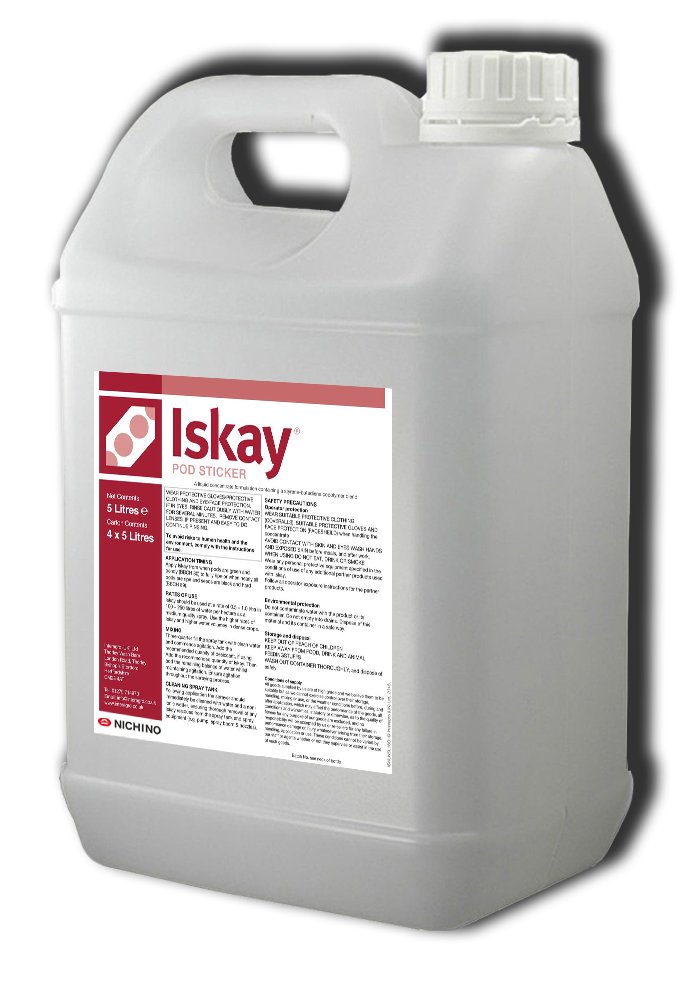
This is where pod sealants such as Iskay play a crucial role. Designed to reinforce the pod structure, Iskay forms a flexible film over the pod surface that helps hold it together under these moisture fluctuations. Importantly, this protection does not interfere with the natural maturation of the crop, allowing seed fill to continue and ensuring that yield potential is fully realised. In practical terms, Iskay gives growers the confidence that the crop can remain intact through variable weather and operational delays.
Iskay is a leading example of this technology and is widely regarded as a reliable tool for protecting yield in a variety of podded crops. Its formulation is based on a specialist polymer blend that creates a fine micro-mesh over the pods, effectively reinforcing them against splitting while retaining enough flexibility to accommodate the final stages of seed development and pod fill. This balance between strength and elasticity is critical, as it ensures that pod protection does not come at the expense of yield potential.
The value of Iskay becomes particularly clear when considered in terms of return on investment. At this stage of the season, growers have already invested heavily in seed, fertiliser, plant protection and crop management. The focus now is no longer building yield, but protecting it. Trials and farm experience consistently show that Iskay delivers measurable financial benefits by preventing losses that would otherwise occur. Average yield increases of around 0.2 t/ha are commonly reported by growers, equivalent to around £90/ha at the time of writing, with higher responses seen in seasons where pod shatter risk is elevated. Additional trial work has demonstrated yield benefits exceeding 0.5 t/ha, underlining the scale of potential losses that can be avoided.
Beyond direct yield protection, Iskay also delivers additional economic benefits that contribute to overall farm performance. By reducing the amount of seed lost to the ground, it helps minimise volunteer oilseed rape to be tackled in the following crop. This can translate into lower herbicide costs and improved rotational control. It also reduces the “green bridge” effect associated with volunteers, which can harbour pests and diseases such as clubroot. Furthermore, by maintaining pod integrity, crops are often easier to harvest, improving combining efficiency and reducing losses at the header.
Another important advantage is the flexibility it provides at harvest. In busy periods, growers are often forced to prioritise fields based on logistics rather than ideal timing. With a pod sealant in place, there is greater confidence that crops can safely wait without compromising yield. This flexibility is increasingly valuable as farm businesses grow and the distances between fields expands in weather patterns that become more unpredictable.
In the context of the 2026 season, the role of pod sealants such as Iskay is particularly relevant. Many crops have the potential to perform well, but this also increases the financial risk associated with pod shatter. Losing even a small percentage of a high-yielding crop represents a significant loss of income, especially as other farm income sources remain modest. After investing months of effort into building yield, it would be a disaster to lose it at the final hurdle due to an avoidable risk.
Ultimately, Iskay should be viewed as a strategic investment rather than an optional extra. It offers growers a simple, practical way to secure the value of their crop at the point where it matters most. Iskay, with its proven efficacy and strong return on investment, provides a reliable solution to one of the most important challenges in oilseed rape production. In a year where crops are full of promise, protecting that potential all the way to the combine has never been more important.