















Recent persistent wet weather has delayed the onset of spring cereal drilling, meaning that growers with potatoes in their rotation have turned their attention to inspecting and treating seed tubers for Rhizoctonia (Black Scurf). When a potential threat of Rhizoctonia has been identified, applying Moncut, available as either a liquid or powder serves as the crucial safeguard against a disease that is otherwise impossible to control later in the season. As these applications commence, it is timely to remind growers and applicator operators of the importance of achieving thorough coverage.
Importance of Correct Application
Proper application is not only a requirement outlined on the product label and a matter of good product stewardship, but it is also vital for ensuring the effectiveness of Moncut and maximising the return on investment. The active ingredient, Flutolanil, is an SDHI fungicide, and will only have minimal uptake within the tuber and plant. Instead, it acts externally by shielding the potato. Any untreated areas remain unprotected and may develop lesions later despite the correct dose rate being applied per tonne. Reliable, purpose-built equipment is available for such applications and should be used when applying Moncut Max or Moncut DS to ensure optimal results.
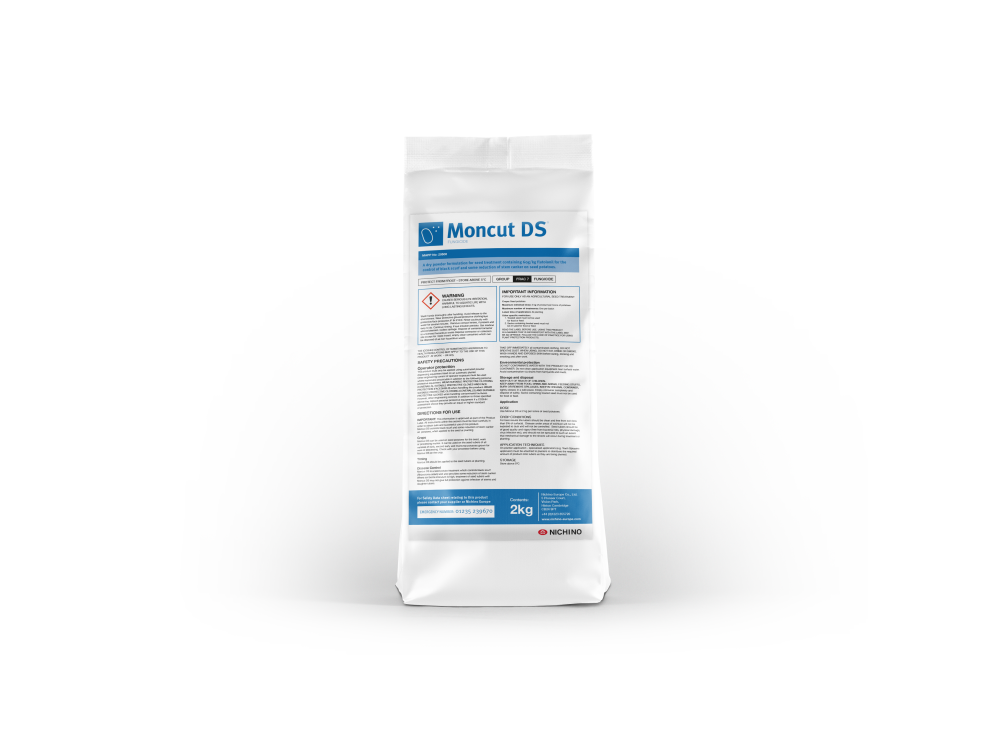
Application of Moncut DS (Powder Formulation)
The Teams on planter applicator is the most commonly used device for applying Moncut DS powder. It is digitally calibrated to deliver the correct dose per tonne during planting. This method is efficient and safe, provided that product is not left in the applicator overnight, which could lead to condensation and cause the powder to stick the following morning.
Safety and Environmental Precautions
When filling hoppers, it is essential to wear appropriate PPE, including eye, face, and respiratory protection, as well as coveralls. Packaging should be collected immediately and disposed of responsibly; leaving packaging to blow across fields or remain in situ poses a risk of environmental contamination, which we must all strive to prevent.
Under no circumstances should Moncut DS be applied using handheld dusting equipment, even if PPE is worn. This practice leads to uneven coverage and poor disease protection, while also increasing risk to both the operator and the environment. Nichino only supports applications carried out with approved equipment.
Application of Moncut Max (Liquid Formulation)
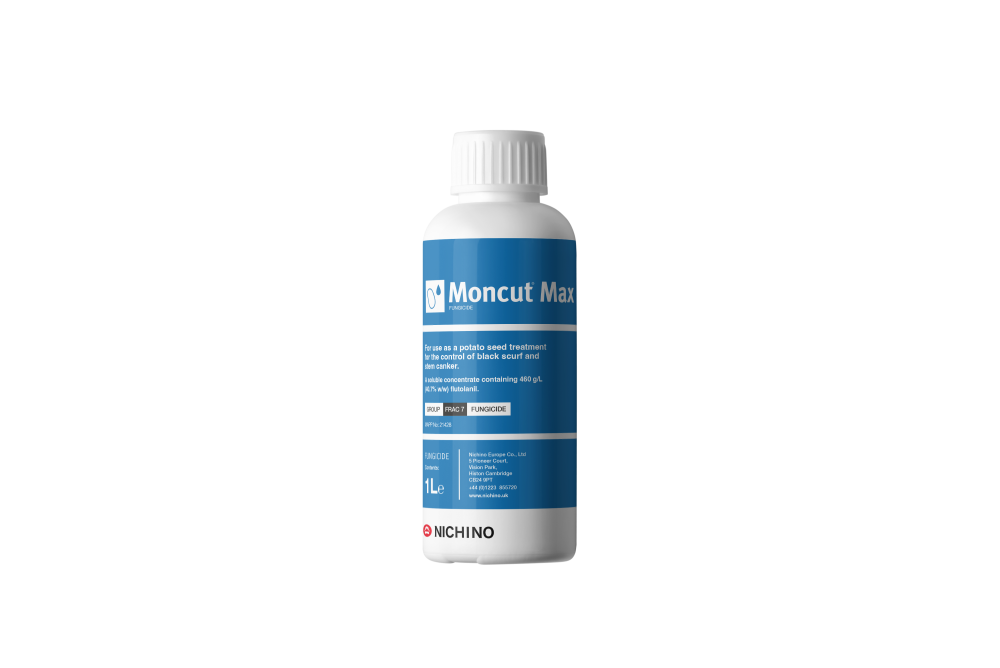
Moncut Max, the liquid formulation containing Flutolanil, can be applied several weeks prior to planting using specialist mounted liquid applicators positioned above a roller table or conveyor. The best results are achieved with 80° angle hollow cone nozzles mounted in a staggered arrangement, such as the Albuz ATR80 or TeeJet Conejet. The white nozzle typically provides sufficient capacity at 2-3 bar pressure. Flat fan nozzles may also be used, but should be angled at 45° to ensure even coverage. Regardless of nozzle type, it is important that they are angled slightly inwards to avoid spraying off the table.
Operating Conditions and Compliance
All liquid applications should be carried out away from windy conditions where drift beyond the treatment area could occur. Employing a suitable shield is important, but applications are best conducted indoors in a well-ventilated area. It is important to note that applying Flutolanil and other potato seed treatments requires specific NPTC PA certification, and evidence of this may be requested during farm assurance and compliance inspections.
For on planter powder applications, in addition to standard PA1, operators require the City & Guilds Level 2 Award In the Safe Use of Pesticides Using Specialist Equipment (PASC), specifically: Operation of pesticide applicators attached to cultivating or planting equipment (PASCC). For liquid applications on a roller table or conveyor, operators need, again in addition to PA1, the City & Guilds Level 2 Award in the Safe Application of Pesticides to Plant Material During a Continuous Flow Process (PA12).
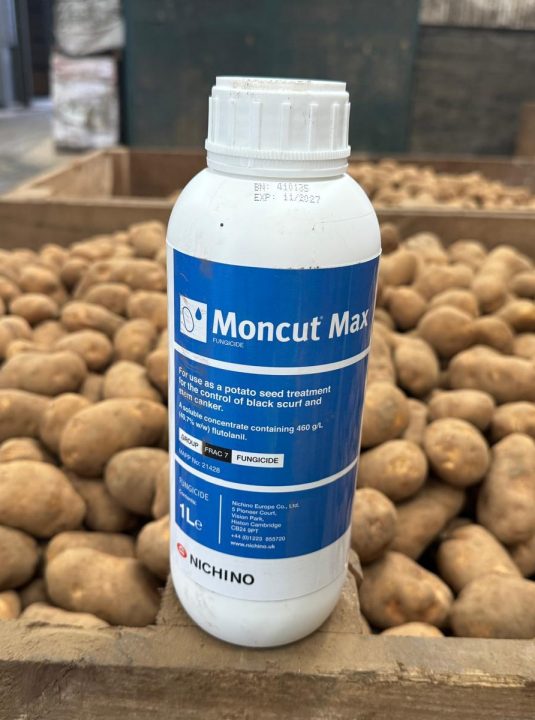

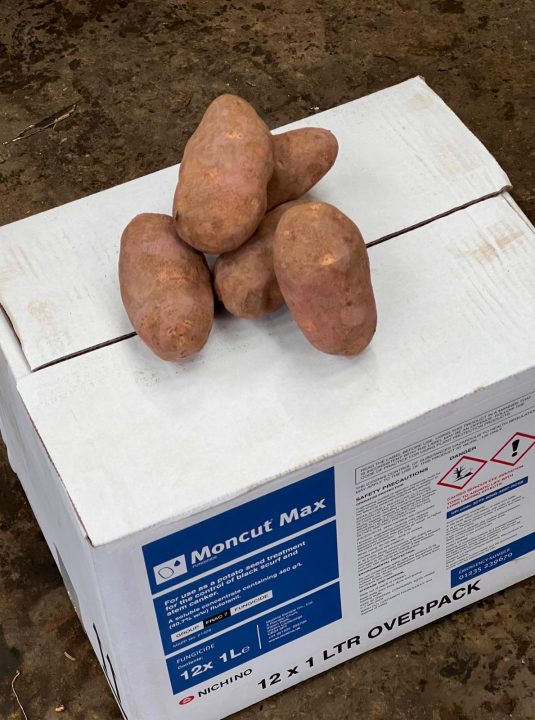
Moncut is a systemic fungicide and contains flutolanil. Moncut is a registered trademark. Use plant protection products safely. Always read the label and product information before use. Pay attention to the risk indications and follow the safety precautions on the label. For further information, call 01223 855720