














2025 brought significant challenges for potato growers across the UK and Europe. A record EU harvest, driven by favourable planting conditions and weather, collided with a sharp price collapse caused by oversupply and weakening domestic demand. Limited storage capacity in the face of record production led to significant spot selling, further fuelling the price slump.
As we look ahead, 2026 promises both opportunities and threats. UK growers face continued price volatility, tightening regulations, and intensifying global competition, not least from our increasingly productive European neighbours. At Nichino, we understand these pressures and are committed to helping growers build resilience and profitability in this dynamic landscape.
For 2026, UK demand is forecast at around 5 million tonnes, representing a modest 0.6% decline compared with 2025. Estimated production stands at 4.84 million tonnes, also slightly down year-on-year. This suggests domestic supply will broadly align with market demand, offering some stability at home. However, the global picture is less reassuring. China, Egypt and India continue to expand their frozen fry exports, exerting pressure on EU processors and reshaping trade flows. It comes on the back of Trump’s so called “Liberation Day” tariffs which restricted Chinese and Indian export to the US and directed their surplus towards to the EU and the EU’s export customers. The EU too was itself hit by Trump’s tariffs which tightened the export opportunities to the US and exasperated the oversupplied, stagnant demand, domestic markets. This competitive backdrop is reflected in European futures prices: April 2026 contracts are trading at €17 per 100kg, the lowest level in four years. Free-buy trade is shrinking, and contracts now dominate the market, leaving ex-farm prices under continued pressure.
Investment in new processing capacity has driven rising processor demand at EU level, resulting in favourable contracts that made potatoes appear to be one of the most attractive cropping options this season. This dynamic will continue into 2026, which is positive for contracted volumes, but surplus production will need to find a market, and the excess crop is likely to face significant price pressure. A reduction in European production volume seems inevitable, and questions now arise as to whether, ironically, demand will now be met despite this year’s oversupply. In a glut like this year we’re seeing increased scrutiny from processors and buyers around the quality of potatoes with rejections reported to be notably higher this season. In a market where the buyer dominates the negotiation, a focus on producing high quality, blemish free potatoes will be even more important if contracts are to be honoured. That’s why Nichino always advocates the use of Moncut (containing the powerful fungicide, Flutolanil) to help protect the crop from important diseases like Rhizoctonia solani (Black Spot) right from planting. It’s likely that growers will need to think carefully about storage, and particularly the use of sprout suppressants, if spot selling is to be avoided and to hold out for more lucrative options and export opportunities.
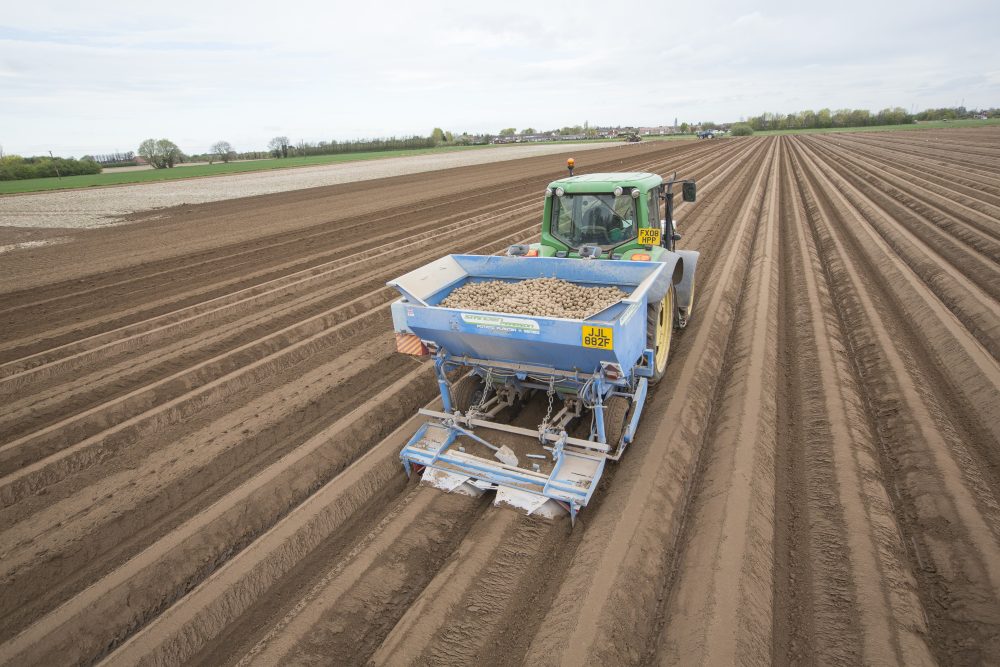
The difficulties this year were exacerbated by an 8.3% increase in EU planted area to 608,000 hectares, with yields predicted to rise 11% on 2024 to 2.65 million tonnes, fuelling the imbalance between supply and demand. Industry voices such as the Dutch Association of Potato Producers and NEPG (North-Western European Potato Growers) are now calling for a 15% reduction in production for 2026 to restore market balance. Managing surplus production should be a priority, discussions are ongoing about diverting excess European potatoes into animal feed and biogas sectors, though practical mechanisms remain unclear. Collaboration across the supply chain will be essential.
Weather patterns added further complexity this season: while conditions were broadly favourable across Europe, extremes were evident. An exceptionally dry spring and summer in the UK contrasted with flooding in Northern Italy, variability that is only likely to continue. Looking forward, volatility in both weather and pricing remains a major concern. Regulatory pressure is also mounting. The EU Green Deal continues to tighten restrictions on plant protection products, while sustainability targets are driving up costs and limiting availability of fertilisers, particularly nitrogen. These factors will challenge growers’ ability to maintain yields and manage input costs effectively. Innovative technologies like biostimulants, and bio-controls are likely to be key in the years ahead to improve Nutrient Use Efficiency (NUE) and still maintain yield.
To counter these threats, innovation is already underway. Heat and drought-tolerant varieties are gaining traction, offering resilience against climate stress because potatoes are highly sensitive to drought and heat stress above 30°C, which disrupts tuber formation and reduces yield. Several weeks this year exceeded these thresholds in the UK, and the James Hutton Institute warns that UK production systems are not currently prepared for such conditions.
Climate change is making these extremes more common, which is why organisations such as the University of Bonn and University of Vienna have been studying molecular responses in varieties that, while lower yielding under optimal conditions, often outperform others when under stress. This is reinforced by work under the EU ADAPT Project, which has tested common varieties like Desirée and Lady Rosetta and found significant differences in stress performance but the output of this work in terms of incorporating the discovered traits into new varieties is likely to be several years away.
Nichino is delivering solutions now. Our portfolio includes:
- Our new 3 way biological soil and seed treatment Ikusei, which is designed to increase root mass and root number, improving water and nutrient uptake and build resilience under drought and stress conditions.
- Crop enhancement technologies such as adjuvants and biostimulants that optimise plant health and maximise the efficacy of partner crop protection products.
- Integrated programmes combining conventional chemistry such as Moncut and Gozai
- Biological innovation to protect yield and quality while meeting sustainability targets.
By strengthening the crop at its foundation and improving stress tolerance, Nichino helps growers safeguard profitability even when conditions and regulations turn against them.
Despite the headwinds, there are bright spots. Consumer interest in ‘climate-smart’ produce is growing, creating opportunities for premium and organic segments. UK growers can also capitalise on niche varieties for export to EU and Middle Eastern markets, where demand for differentiated produce is rising.
Skills development will play a critical role in navigating these changes. Initiatives such as GB Potatoes’ Future Skills Programme aim to equip growers with the knowledge and tools needed to thrive in a more complex and competitive environment. Nichino supports these efforts by providing technical expertise and practical solutions that align with sustainable and environmentally conscious production.
The outlook for 2026 is mixed. Price volatility, regulatory constraints, and climate uncertainty will continue to test the resilience of UK and EU growers. Yet, through innovation, diversification, and strategic collaboration, the sector can turn these challenges into opportunities. Nichino stands ready to help growers adapt and succeed, because adaptation is no longer optional, it’s the key to thriving in an increasingly globalised and sustainability-driven market.